The slow-release polycarboxylic acid water-reducing agent controls the dispersion process of cement particles by chemical means so that the water-reducing agent molecules have the function of continuously dispersing cement particles and slowly adsorbing on the surface of cement particles within a certain period. According to the release principle, the slow-release water-reducing agent can be divided into physical and chemical. Physical slow-release is mainly achieved through diffusion and osmosis, such as using ice cubes to freeze a part of the water-reducing agent and releasing the water-reducing agent molecules by melting the ice cubes by increasing the temperature. This method has excellent difficulties in actual use. Chemical slow-release realizes its slow-release principle by breaking the chemical bonds between atoms. Chemical slow-release water-reducing agents can be divided into two types: intramolecular reaction type and cross-linking type. The molecules of intramolecular reaction-type slow-release water-reducing agents generally contain amide groups, acyl anhydrides, and ester groups that can be hydrolyzed into hydrophilic groups such as carboxylic acids in an alkaline environment. During the gradual hydrolysis process, these hydrophilic groups continue to adsorb and disperse cement particles. Cross-linked slow-release water reducers can directly introduce monomers with multiple double bonds through polymerization reactions or perform trace cross-linking on polymerized macromolecules. They can also conduct ion cross-linking through coordination bonds between oxygen on the carboxyl group and metal elements. Like the intramolecular reaction type, cross-linked slow-release also gradually releases macromolecules with dispersing effects through hydrolysis of molecules in an alkaline environment to achieve a slow-release effect. The slow-release mother liquor can be understood as the cold capsules or sugar-coated tablets that are taken daily. For some drugs that need to be absorbed in the small intestine to avoid gastrointestinal absorption, the gradual dissolution of the sugar coating plays a slow-release effect to protect the maximum absorption of the drug components.
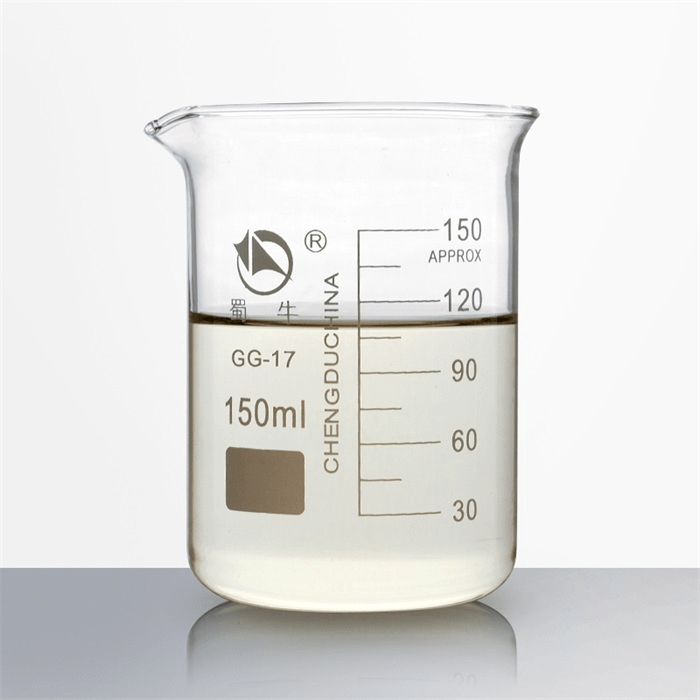
The slow-release polycarboxylate water-reducing agent introduced below is chemically modified based on the water-reducing mother liquor. Carboxylic acid derivatives are introduced to provide initial protection for the carboxylate ions in the molecule. Since the concrete paste will form an alkaline environment during the hydration process, the carboxylic acid derivatives in the slow-release water-reducing agent molecules undergo hydrolysis during the concrete mixing process. This gradual release of carboxylate ions with anchoring effects and dispersing effect is a key process, thereby achieving the effect of slowly dispersing cement particles. Applying slow-release mother liquor effectively improves the problem of polycarboxylate admixtures being sensitive to raw materials and improves its adaptability to concrete. The commonly used group for protecting carboxylate ions is the ester group, and hydroxyethyl acrylate is the most widely used raw material for producing slow-release mother liquor. Because the initial water reduction rate of the slow-release mother liquor is lower than that of the water-reducing mother liquor, a particular cost is often required in the application. This is a relatively significant obstacle to the practical application of the slow-release mother liquor.
(1) Experimental raw materials
TPEG has a better collapse-preserving effect, but for the convenience of production, this experiment still uses the same monomer HPEG as the water-reducing mother liquor. The polycarboxylic acid mother liquor synthesized using TPEG will be introduced in the future. The synthesis equipment needs to be introduced in detail. You can look through the previous articles if you want to know more.
1. Monomer HPEG; produced by Fujian Zhongshan Chemical. Molecular weight 2400
2. Acrylic acid, produced by Wanhua Chemical
3. Hydroxyethyl acrylate; produced by Shandong Derui
4. Thioglycolic acid, imported from Japan
5. Vitamin C, produced by Shijiazhuang Pharmaceutical Group
6. Hydrogen peroxide 27.5%; purchased locally
(2)Synthesis process and operation
The synthesis process is the same as the water-reducing mother liquor.
1. Start stirring and put 325g monomer and 300g water into a four-necked bottle; weigh 2.6g hydrogen peroxide for use (placed into the four-necked bottle before dropping);
2. Weigh 25g acrylic acid, 29g hydroxyethyl acrylate, and 50g water in beaker A; weigh 0.5g vitamin C, 2.6g thioglycolic acid, and 50g water in beaker B;
3. After stirring in the four-necked bottle for 30 minutes, most of the monomer is dissolved in water. Put the previously weighed hydrogen peroxide into the four-necked bottle and continue stirring for 2 minutes;
4. Turn on the A and B peristaltic pumps to ensure that the solution in beaker A is added after 120 minutes, and the solution in beaker B is added after 150 minutes.
5. After the addition is completed, continue stirring for 60 minutes and add 192g of water;
6. The synthesis is completed.
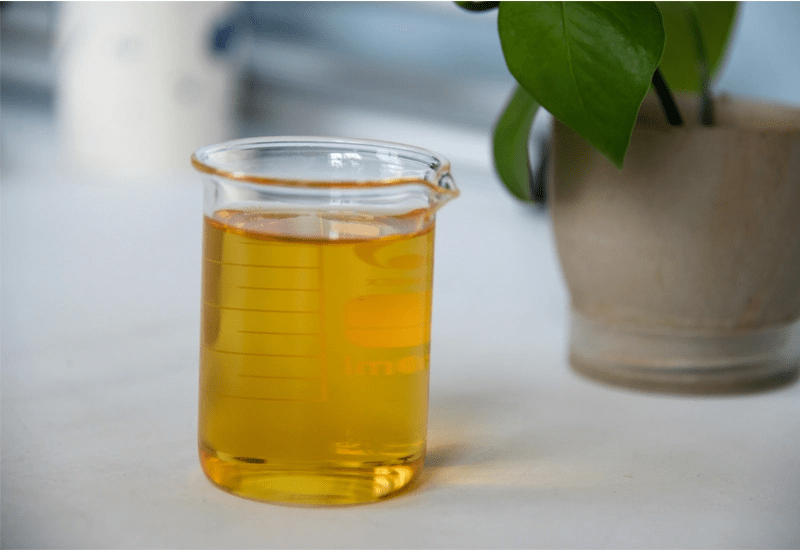
Hydroxyethyl acrylate is the key to synthesizing slow-release slump-retaining mother liquor and, at the same time, adjusting the mother liquor’s initial water reduction rate and slump-retaining effect according to the dosage of acrylic acid and hydroxyethyl acrylate. Relatively speaking, as the dosage of acrylic acid decreases and the dosage of hydroxyethyl acrylate increases, the initial water reduction rate of the mother liquor will decrease, and the slow-release performance will increase. The initial water reduction rate of the synthetic process mother liquor mentioned in the article is about 75% of the water-reducing mother liquor. In general, the slow-release effect could be more substantial. The application cost-effectiveness will be higher for some areas that do not require such a high slump-retaining effect. As mentioned above, the slow-release mother liquor can improve the slump loss problem of concrete and even enhance the workability of concrete, but it will correspondingly increase the compounding cost of admixtures.

 concrete admixture
Leave a comment