As one of the primary materials for concrete, sea sand is characterized by low-quality requirements and low added value, but the total demand is enormous. River sand is the primary source of construction sand, but the supply of river sand is limited by factors such as resources and environmental impacts and cannot fully meet construction needs. According to a research report by the United Nations Economic and Social Commission for Asia and the Pacific, when the per capita GDP reaches US$1,000, the per capita demand for construction sand is 2 tons per year.
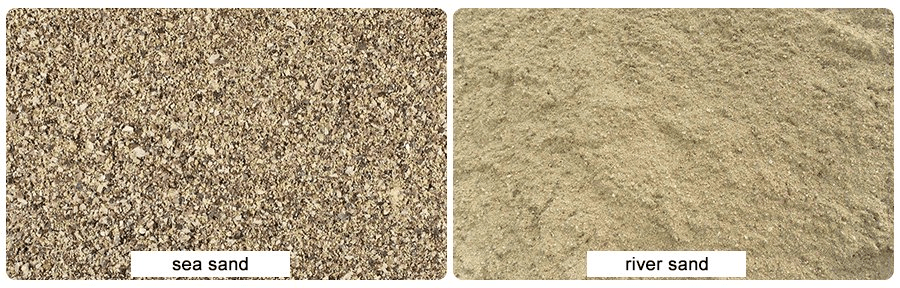
The increasing demand for construction sand in the construction industry and the increasing scarcity of river sand resources have shifted people’s attention to the abundant reserves of sea sand. Compared with river sand, sea sand has the characteristics of low mud content and uniform fineness modulus, but it contains many chloride ions, which are a critical factor in the corrosion of reinforced concrete and an essential reason for the reduction of concrete durability.

The harm of sea sand to concrete
Compared with river sand, sea sand generally has suitable particle size, hard particles, good gradation, and low mud content. Moreover, sea sand is mostly medium sand with low powder content, which is suitable for construction sand. However, there are also some significant problems with using sea sand, especially the presence of harmful substances in sea sand, which affects the durability of reinforced concrete.
Corrosion of chloride ions on steel bars
Concrete is alkaline, and the pH value is generally around 12.5. In an alkaline environment, steel bars are prone to passivation reaction, and a dense passivation film will form on the surface of the steel bars to prevent corrosion and protect them. Chloride salts in sea sand will destroy the alkaline protective film on the surface of the steel bars and cause the steel bars to rust. Steel bar corrosion is an electrochemical process: at the anode, iron gradually ionizes; at the cathode, oxygen in the water absorbs electrons to generate hydroxide ions. The anode’s iron ions combine with the cathode’s hydroxide ions to generate iron hydroxide. Chloride ions play a catalytic role in the corrosion of steel bars and will not be consumed during the entire corrosion process. Even if there are very few chloride ions in the sea sand, the service life of the concrete structure will be significantly shortened.
When steel bars rust, the volume of rust produced can be 2-4 times the original volume of the bars. This expansion in all directions can lead to concrete cover cracking and the destruction of the bond between the steel bars and concrete. The surface cracking further accelerates the corrosion of the steel bars. Ultimately, the steel bars can squeeze the concrete cover to the point of reaching the limit tensile strain, causing severe structural damage. This sequence of events underscores the potential for significant harm to concrete structures.
The influence of light materials such as shells on the strength of concrete
Shells are light materials in the harmful materials in the construction sand standard. The main component of shells is calcium carbonate. Although shells are inert materials and generally do not react chemically with cement, these light materials are often thin flakes with smooth surfaces, low strength, easy to crack along the texture, and poor bonding ability with cement slurry. Generally speaking, when the content of light shells is high, the workability of concrete will deteriorate, and its durability will decrease.
The stability of sand is a prerequisite for optimizing the concrete mix ratio. The use of sea sand in concrete is a viable option. By adjusting the local sea sand fineness modulus, the effect of using machine-made sand can match the river sand standard. With a total dosage of 14% antifreeze components, the chloride ion content in the sand can even exceed the required level for sea sand. However, it’s important to note that ongoing research is being conducted to verify the specific effects of these components, ensuring a thorough understanding of their impact on concrete strength and durability.

 concrete admixture
Leave a comment