1. Classification
According to the formation method of sand: natural sand, artificial sand, mixed sand.
2. Fineness modulus:
According to the fineness modulus, it can be divided into coarse sand (3.1-3.7), medium sand (2.3-3.0), fine sand (1.6-2.2), and extra-fine sand (0.7-1.5).
3. Shaking screen machine:
Each layer of the shaking screen machine comprises screens with a specific size of pores, and the screen pores gradually become smaller from top to bottom. Take 500 grams of sand and put it in the shaker, and the sand will fall downwards under the action of gravity. Large particles remain on top, while small particles continue to fall until the screen catches them with corresponding apertures. The weight of sand intercepted by each layer is called sieve residue; sieve residue/total weight 500 grams * 100% = divided into sieve residue. The sum of the sieve residue of each layer and the previous sieve residue is recorded as the cumulative sieve residue βi. βi represents the cumulative sieve residue of each layer; μf represents the fineness modulus. Fine sand and medium sand are the most commonly used. The finer the sand, the greater the specific surface area of the same weight and the stronger the adsorption capacity for admixtures and water. The workability of concrete will improve, but the viscosity of the concrete produced will increase, which is not conducive to construction and increases the cost of concrete in disguise. Extra-fine sand is generally used in conjunction with artificial sand with poor gradation. Both sides make up for each other’s strengths and weaknesses. If the sand is too coarse and the gradation becomes poor, the fluidity of the concrete will become poor, and it will effortlessly bleed.
4. Grading
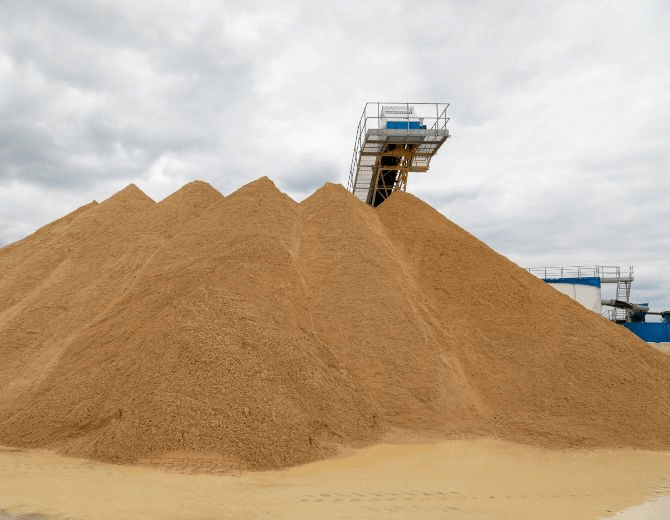
Natural sand sometimes suffers from poor gradation except for washed and particularly coarse sand. The probability of washed natural sand appearing in the silo of a mixing station is about the same as finding money when going out. With the addition of a treatment process, the price of sand will rise to a higher level. Cost is the limited consideration for mixing plants. Ordinary sand contains more or less mud. In addition to its many shortcomings, mud has an immediate effect on improving the workability of concrete. The grinding of mechanically broken artificial sand is less uniform and thorough than the water erosion over the years, so artificial sand with poor gradation is often the result. The solution is also relatively simple: configure some fine or extra-fine sand. The mixing ratio is very mature in mixing station applications.
5. Mud content
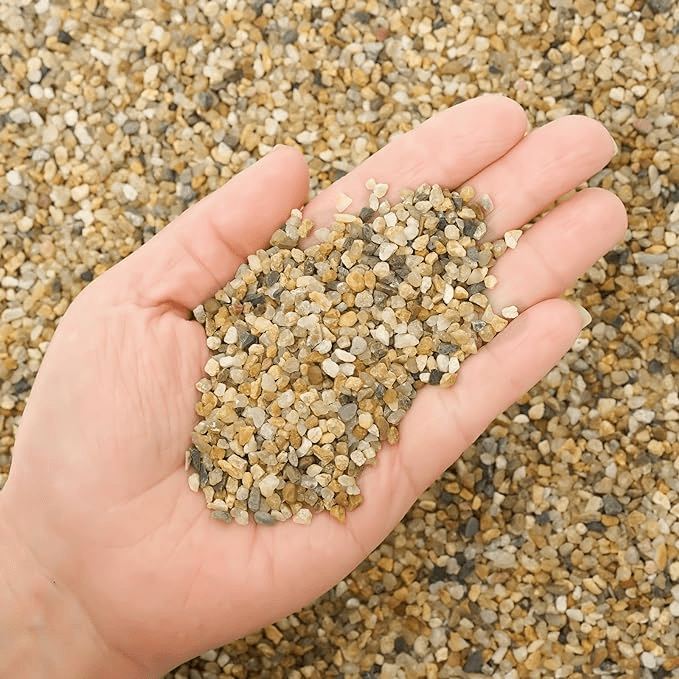
Mud comprises clay minerals whose main components are kaolin, montmorillonite, and illite. The particle size of mud is tiny (≤2 microns), highly hydrophilic, has colloidal properties, and has a specific spatial structure. The ability of mud to absorb admixtures is more than 4 times that of cement. Through competitive adsorption in concrete, polycarboxylic acid admixtures are preferentially adsorbed by mud. If the mud content is too high, the strength of the concrete will be affected; the dosage of admixtures will increase, and the loss of concrete will increase. In particular, polycarboxylic acid admixtures are very sensitive to mud content.
6. Stone powder content
Stone powder is generally found in artificial sand. Because the stone powder is an inert substance and does not participate in the competition for the adsorption of admixtures, the specific content of stone powder can increase the gradation of artificial sand and improve the workability of concrete. Therefore, it is necessary to contain stone powder in artificial sand. However, if the stone powder content exceeds 15%, it will still significantly increase the amount of admixtures and reduce the strength of the concrete. Current research shows that a stone powder content of 10%-13% is the optimal configuration for artificial sand.
7. Others
In addition to some of the data often encountered above, there are solidity, impurities, bulk density, porosity, organic matter content, chloride ion content, and water absorption. These data are used relatively rarely.

 concrete admixture
Leave a comment